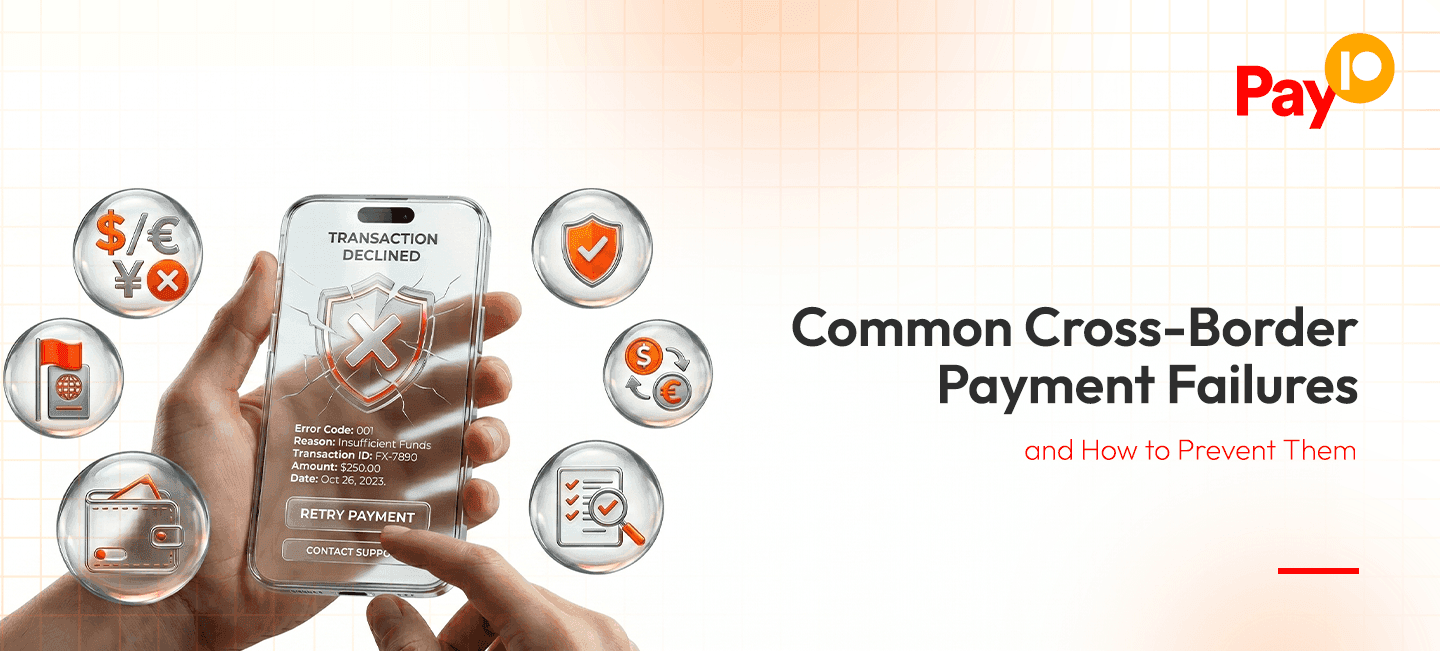
For an international business, cross-border payments are essential, but they can be really challenging. Delays, errors, and failed transactions can frustrate customers, disrupt cash flow, and slow down growth. At Pay10, we understand these challenges because we help businesses accept payments from around the world every day.
Here are some of the most common reasons cross-border payments fail and actionable ways to prevent them.
How to prevent it:
Make sure that all the payment details are collected accurately before initiating a transfer. Use digital validation tools that check format and completeness before submission. At Pay10, seamless digital forms help reduce manual errors and improve success rates.
Expand globally with confidence. Pay10's RBI-authorised cross-border payment solutions help businesses receive international payments through trusted payment infrastructure.
How to prevent it:
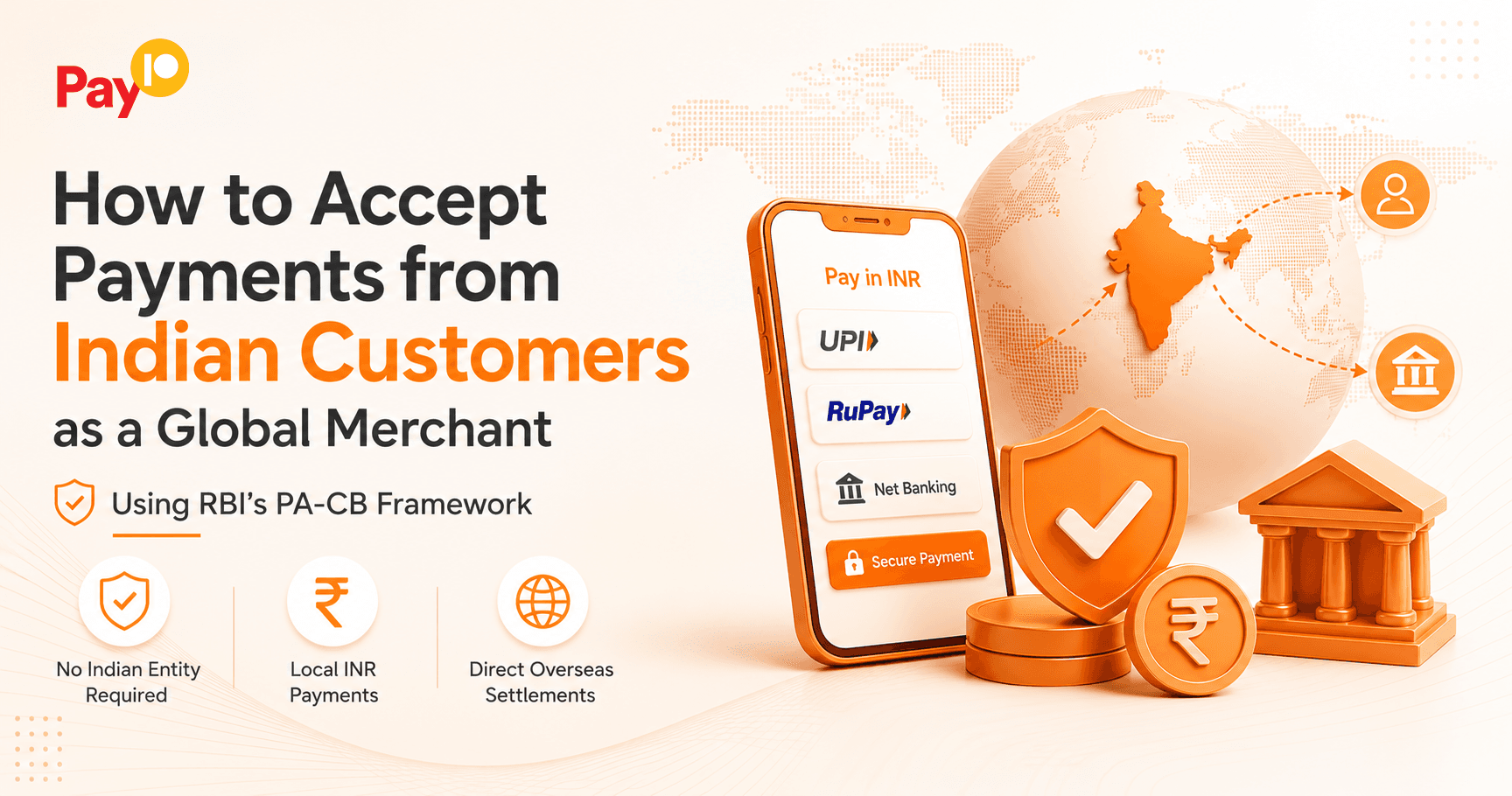
Select a payment option that supports a variety of international payment options. A reliable cross-border payments platform should support multiple currencies and payment methods so customers abroad can pay the way they’re used to, which directly improves transaction success rates and reduces drop-offs at checkout. Beyond currency support, the platform should also offer real-time visibility into failed or pending transactions, so businesses can step in quickly instead of losing the sale entirely. Pay10 supports more than 100+ domestic and international payment options, including UPI, cards, net banking, and wallets, so your customers can pay through options they trust.
How to prevent it:
Choose a partner that can perform FX conversion and compliance as part of the payment process. Pay10’s system is built to facilitate international payments and comply with regulatory requirements, thus avoiding the problem of failed payments due to a lack of compliance.
How to prevent it:
Before initiating a cross-border payment, always verify the payer’s account status and balance. Offer customers real-time balance checks and alerts to avoid failed attempts, which improves the customer experience and reduces support tickets.
Pay10 helps businesses manage global payment flows with trusted cross-border infrastructure and enterprise-ready payment capabilities.
How to prevent it:
Integrate with a reliable payment infrastructure. Pay10 offers various convenient integration solutions, including hosted payment pages, mobile SDKs, and direct APIs.
How to prevent it:
Make sure that your payment gateway is equipped with strong yet smart security checks. Pay10 uses highly advanced security processes and the best possible data protection practices to ensure that payments are secure without resulting in unnecessary failures.
The failure of cross-border payments can be expensive, not only in terms of lost funds but also in terms of trust and business momentum. To prevent failures, you should begin by selecting the right payment partner and the right processes.
At Pay10, we assist businesses in various sectors to receive secure and seamless cross-border payments through:
With an understanding of why cross-border payments fail and the use of technology that prevents such failures, your business can enhance success rates, increase customer trust, and grow seamlessly in the global market.