A cross-border fee is the cost applied when money moves from one country to another, whether an Indian business is receiving a payment from abroad or sending funds overseas. These charges arise because international payments pass through different systems, currencies, and regulatory bodies, with costs coming from currency conversion, processing and network charges, compliance handling, and intermediary banks. If not managed properly, these fees can slowly eat away at profit margins. Businesses can reduce cross-border fees by consolidating payments, using modern payment infrastructure, understanding the fee breakdown, and choosing transparent providers that minimise hidden charges. By improving the efficiency of the payment process and working with trusted partners like Pay10, businesses can lower unnecessary expenses, simplify global collections, achieve better margins, and make receiving international payments in India much easier.
Companies that handle international transactions often face extra charges. This is known as a cross-border fee, and it can add up much faster than most businesses expect.
If these charges aren't managed, they can slowly eat away at your profit margins. However, by understanding how they work, businesses can manage these costs much better.
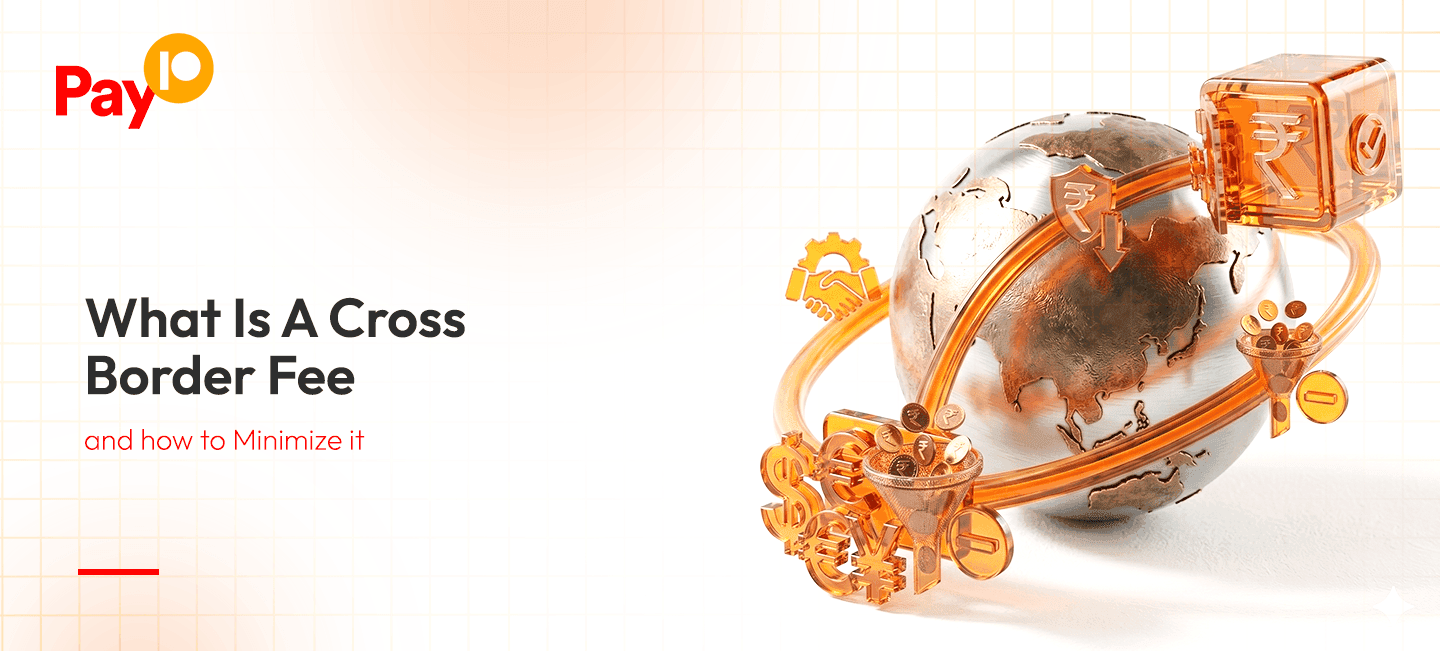
A cross-border fee is the cost applied when money moves from one country to another. It usually appears when an Indian business receives a payment from abroad or sends funds overseas.
Why does it exist? Because international payments pass through several different systems, currencies, and regulatory bodies. Every step in this journey has a cost, and these are often bundled into one single fee.
Expand globally with confidence. Pay10's RBI-authorised cross-border payment solutions help businesses receive international payments through trusted payment infrastructure.
Reducing fees isn't just about saving money; it's about making your whole payment process smoother through robust electronic payments and services. This is where a good payment partner comes in. A system that balances speed, security, and compliance can simplify your transactions. Pay10 is built for this. As an established payment aggregator in India, it offers reliable infrastructure for cross-border collections. By using modern tools like Pay10, businesses can focus on growth instead of worrying about payment complications.
Receive payments from international customers while managing collections through a trusted fintech platform built for business growth.
Cross-border charges are a part of international trade, but they don’t have to drain your revenue. When businesses understand where these charges come from, they gain more control over their profits.