
India's digital payment ecosystem is the fastest-growing in the world, driven by mobile-first architecture:
When a non-resident merchant uses a standard foreign payment processor (such as a US-based Stripe or Adyen integration), card approval rates drop drastically. This is driven by two RBI regulatory mandates:
| Feature | Option 1: Local Indian Entity | Option 2: Payment Aggregator - Cross Border (PA-CB) |
|---|---|---|
| Setup Time | 3 – 6 Months | 1 – 2 Weeks |
| Local Entity Required? | Yes (Pvt Ltd / Subsidiary) | No (Operate as non-resident business) |
| Indian Bank Account Required? | Yes (Domestic INR Account) | No (Direct foreign account remittance) |
| Supported Payment Rails | UPI, Net Banking, Local Cards | UPI, Local Cards, Net Banking |
| Regulatory Framework | Domestic PA Guidelines | RBI PA-CB Directions |
| Per Transaction Limit | Unlimited | ₹25,000,000 (INR 25 Lakhs / ~$30,000) |
The Payment Aggregator – Cross Border (PA-CB) framework established by the RBI directly regulates entities facilitating cross-border current account transactions.
Under this setup, an RBI-authorized PA-CB entity acts as a compliant intermediary:
Step 1 - Checkout in INR:
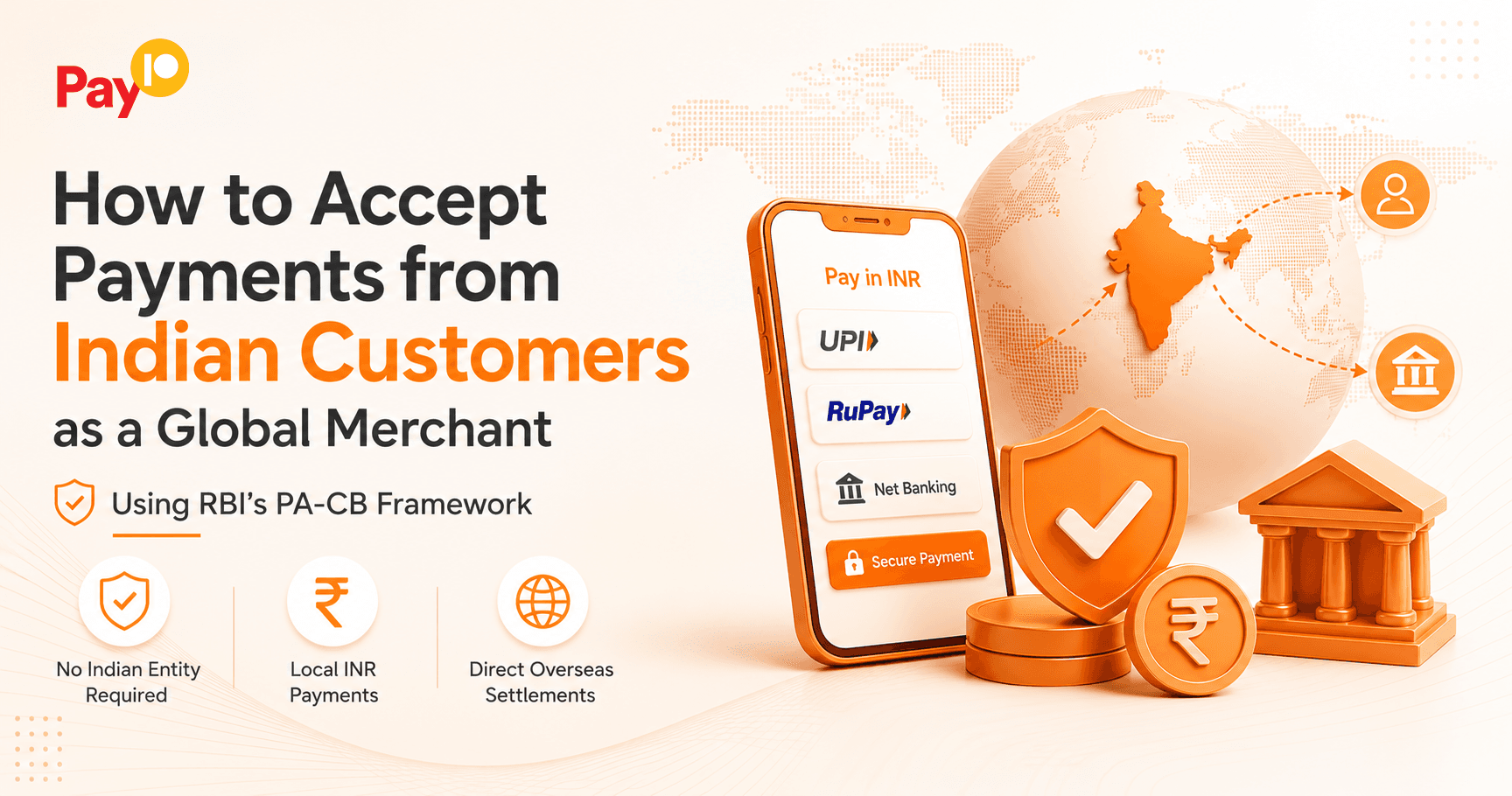
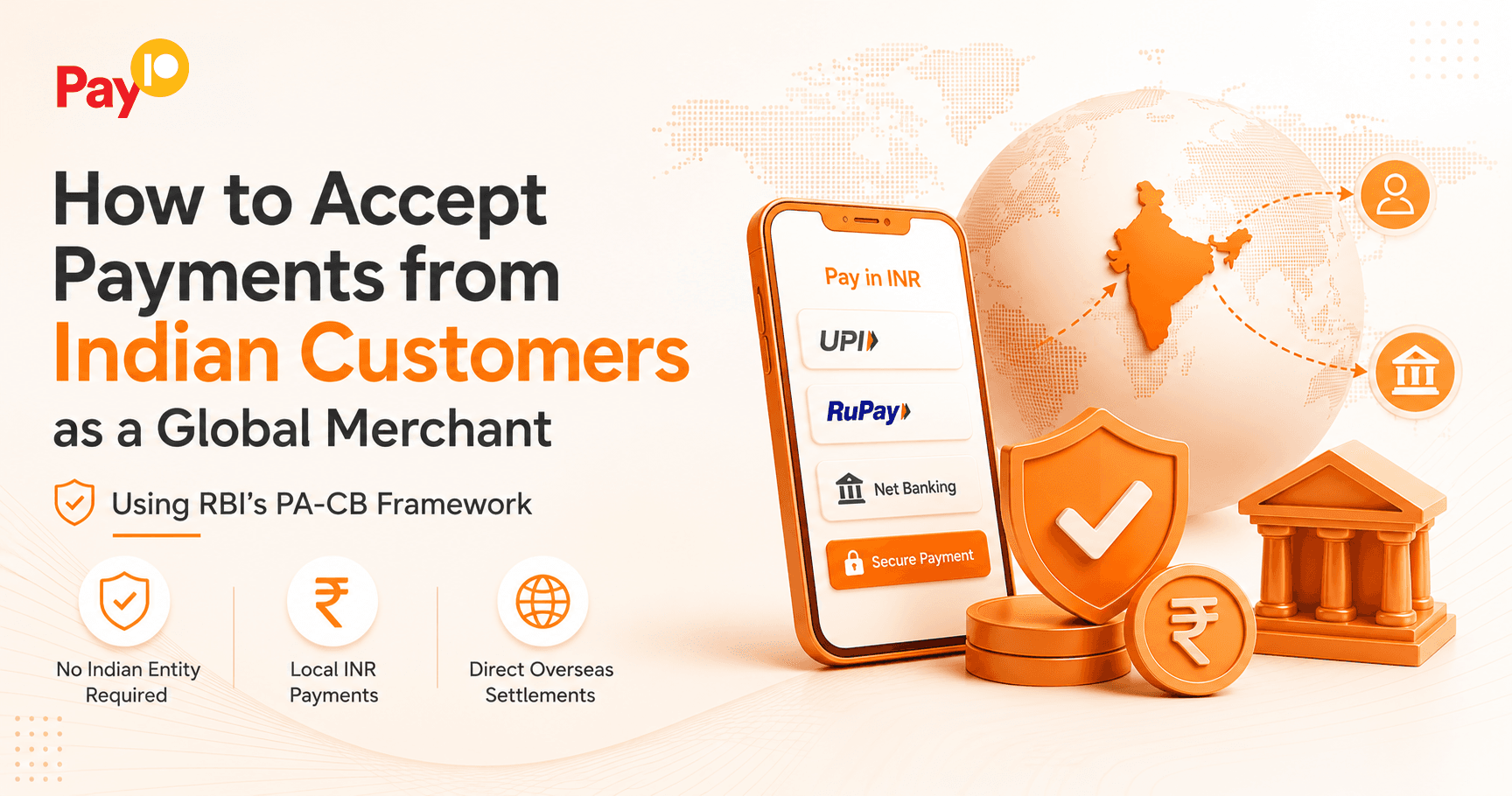
The Indian customer selects products or services priced in INR and chooses a local payment option (UPI, RuPay, Net Banking).
Step 2 - AFA Verification:
The transaction is completed through RBI-compliant 2-Factor Authentication (UPI PIN or SMS OTP).
Step 3 - Outward Collection Account (OCA):
Funds are collected into the PA-CB's designated Outward Collection Account (OCA) maintained with an Authorised Dealer (AD Category-I) Bank before onward settlement overseas.
Step 4 - Forex Conversion & Purpose Code Tagging:
The PA-CB executes foreign currency conversion and tags the outflow with the appropriate RBI Purpose Code (e.g., P0802 for Software Exports/SaaS).
Step 5 - Overseas Payout & e-FIRA Generation:
The funds are settled to your overseas corporate bank account in accordance with RBI and FEMA reporting requirements.
Critical Transaction Limit: Under official RBI PA-CB rules, individual transactions processed via this channel are capped at ₹25,000,000 (INR 25 Lakhs / ~$30,000) per trade/service item. B2B enterprise transactions exceeding this limit must be processed via standard direct SWIFT wire transfers or traditional trade banking.
Merchant Due Diligence (KYB): Depending on your business model and the nature of goods or services supplied to Indian customers, GST registration and compliance obligations may apply. Merchants should consult their tax advisors before onboarding.
Correct Purpose Code Selection: Ensure your product or service type is mapped to the correct RBI Purpose Code during onboarding to avoid compliance delays or settlement holds.
Sources:
Reserve Bank of India (RBI) Master Directions on Payment Aggregators & PA-CB
National Payments Corporation of India (NPCI) - Monthly UPI Statistics
Foreign Exchange Management Act (FEMA) Guidelines - Reserve Bank of India